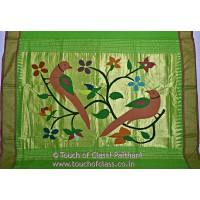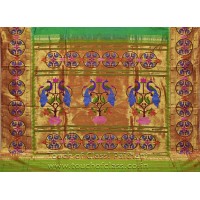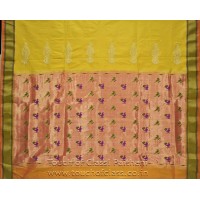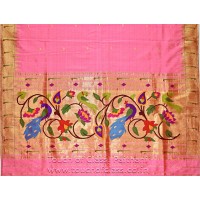
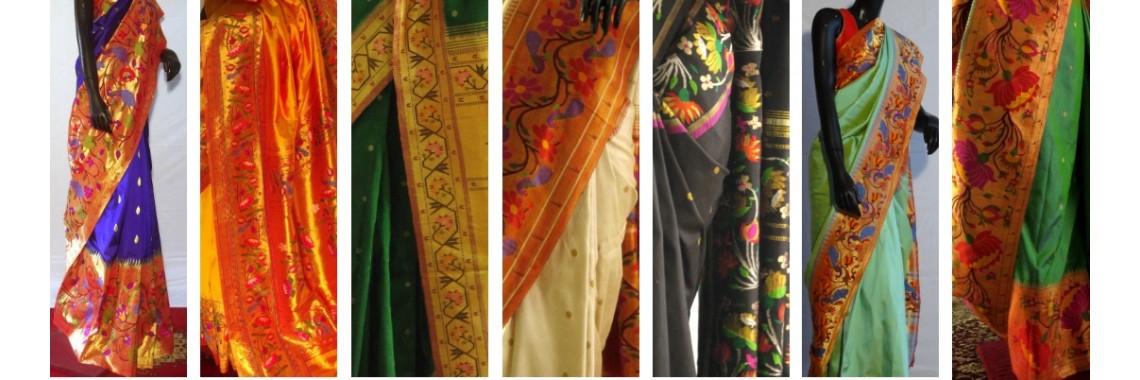
Bangadi Mor Paithani: Bangle Peacock (Bangadi Mor) Paithani Vases [Pallu Contents] & Bangle Peacock Vines [Border Motifs] Bangadi-Mor or Bangle peacock is foremost beautiful and intricate design that dates back to almost 2000 years. Early weaves were found only in Pallu while in 1400 A.D. they found place in border as well. Delicate to the level that a 3" bangle consist of around 36 elements including 4 peacocks and a central flower. As time elapsed, changes and eliminations either due to cost or the work involved, elements as low as 10 are weaved today. Sandwitched between parrots, peacocks, stars and asawali's besides flowering vine and lotuses, some borders are 6" to 18". In last 100 years not a single true Bangadi-Mor was weaved.  
Asawali Paithani: Asawali Vases [Pallu Contents] |&| Asawali Vines [Border Motifs] Asawali Motifs, Vases and Vines were popular in 18th to 19th Century during rule of Peshwa of Pune. Asawali was adopted from Gujarat as the Peshwa established Yeola as weaving centre and commissioned weavers from Gujarat to weave Paithanies for royals. Since the Mughal influence was predominant, vines and vases remained main stream pattern. Around 600 variants are available from this design from a simple vine to a intricate 6 yard filler. 
  
      Akruti Paithani: Akruti or Geometry Vases [Pallu Elements] |&| Akruti or Geometry Vines [Border Motifs] Akruti Motifs, Vases and Vines were popular in 16th and 17th Century during rule of Maratha Kingdom. Due to its elegance and simplicity these were used in almost all paithani sarees either as main element or elements in pallu. Even today Akruti retained its place in most Paithanies woven. When you are thinking of simple yet artistic weave, one can choose among 20 designs for border and pallu. 

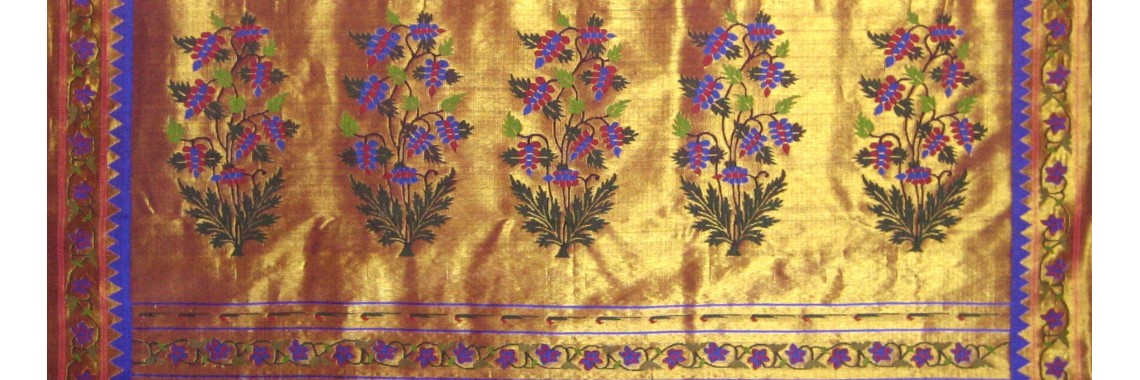
Flower Paithani: Flowers & Leaves Vases [Pallu Contents] |&| Flowering Vines [Border Motifs] Mughal's love for flowers and gardens and Paithanies reflected in various elements and designs starting from simple 4 petal flower to intricate roses, lotuses and tulips. Combinations of many elements made them rich and unique and this was followed till date with new elements adding and founding permanent place. Each motif is weaved in different ways create its own style. Since past 1000 years there are numerous designs that weaved and made each paithani a charm of its own. 

Koyari Paithani: Koyari (Mango) Vases [Pallu Contents] |&| Koyari (Mango) Vines [Border Motifs] Koyari or Mango is integral part of Indian culture and tradition. It was weaved in Paithani for almost 1000 years since Maratha kingdom was dominant in the region. Many additions and variations gave it modern look and intricateness. 
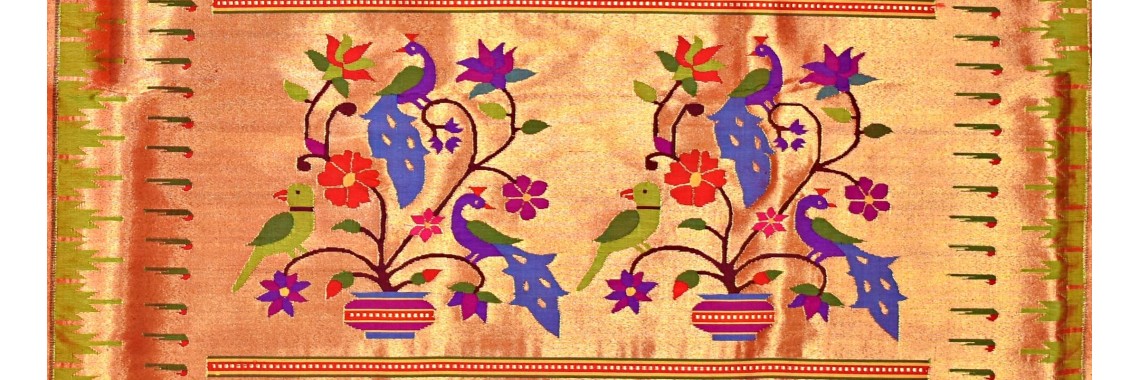
 Peacock Paithani: Peacock-Flower Vases [Pallu Contents] |&| Peacock-Flower Vines [Border Motifs] Peacock is synonym for Paithani. In local language it is termed as Morachi Paithani where Mor means Peacock. Several variations and designs kept adding since thousand year kept it most popular design till date. 
Lotus Paithani: Lotus Flowers or Kamal Pushpa Vases [Pallu Contents] |&| Lotus or Kamal Pushpa Vines [Border Motifs] Buddhism's origin is Lotus and it is no wonder that past 2000 years Lotus remained a key ingredient of Paithani weaving. Rightmost is form of Ajanta Lotus while others are inspired from the murals of Ajanta caves. 
 
Muniya Paithani: Muniya Paithani Border [Border element and addition to Pallu] Originally Muniya motif was used to fill the weave in and around other motifs. It was introduced in 1970's as independent border form by essence of lower cost woven border. 
     
Peacock and Parrot Paithani: Parrot-Peacock-Flower Vases [Pallu Contents] |&| Peacock-Flower Vines [Border Motifs] Peacock is synonym for Paithani. In local language it is termed as Morachi Paithani where Mor means Peacock. Several variations and designs kept adding since thousand year kept it most popular design till date.

   
|